
Open-plan office fitouts can enhance collaboration and networking opportunities for your business. They may also reduce germ transmission and enhance communication, though you must make sure acoustic and design solutions are in place so your team members can work efficiently.
Creativity thrives in an open space and partitioning your team into individual closed workspaces can diminish productivity. Successful offices have both open areas and partitioned sections for impromptu meetings.
Cost-effectiveness
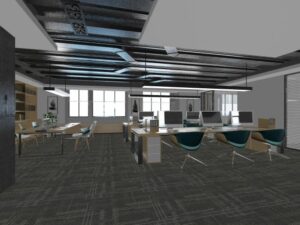 No matter if you are moving into a new office space or renovating existing ones, open-plan office fitouts Melbourne tend to be less costly than their cellular counterparts. Without walls or partitions bringing down construction costs and decreasing overall business expenses via reduced utilities like electricity and heating usage.
Open plan offices also tend to consume less energy due to allowing natural light into every corner, saving your company money in the long run. Furthermore, their flexible design can easily accommodate additional team members or new equipment that might come your way – which ultimately saves money in the form of reduced costs for rent or utilities costs.
Open plan offices may present certain drawbacks, including distractions and lack of privacy; these problems can be overcome with strategic acoustic solutions and furniture designed to offer different workspace environments – for instance huddle booths, standing desks, breakout areas and phone rooms can give your team space they need to concentrate without interruption from other teams or distractions from outside sources.
Though open plan layout offers numerous benefits, some businesses worry it could lead to increased sick days for employees due to germ spreading. There are ways of mitigating this threat though – one such solution being using color-coded signals used by team members within the open office environment; red doors signal “go away” while other colours signal communication availability between team members in an open environment – for instance red could signal coworkers who are focused on work but unavailable for conversation.
Versatility
Open-plan office fitouts offer exceptional versatility to help meet the needs of your team. This design style encourages collaboration and company culture enhancement while simultaneously increasing creativity and productivity – yet improper design could cause major headaches for businesses.
For example, working in an open-plan office fitouts Melbourne without walls around you can make it hard to concentrate when your colleagues are engaging in conversations that encroach onto your workspace or taking calls from clients who require privacy. Noise levels may also prove distracting as conversations you don’t wish to listen in on can sometimes slip by without notice – something introverted workers preferring working alone or with smaller groups may find difficult.
One way to address these challenges is to create hybrid offices, which combine open spaces with traditional cubicles and private areas. This will give employees more options for working, depending on their individual needs and the nature of their project at hand. You can do this using meeting pods or furniture that delineates different spaces without using bulky room dividers – this will de-clutter your space while creating quiet zones where individuals can focus on individual projects without disruption – ultimately increasing productivity by giving staff more options for focusing on tasks they care most about – helping staff to do what matters most to them while increasing productivity!
Communal space
Due to modern technology, some employees find it challenging to communicate effectively in an open office setting. There are various strategies you can employ to make your workplace as collaborative as possible while still accommodating privacy and individuality, including creating different workspaces for team members to choose from. Some employees may prefer working in quieter corners away from large windows or noisy neighbours while others might find more productivity by being immersed in an open area.
Open-plan office fitouts Melbourne is an ideal solution for small teams, enabling employees to discuss projects openly while saving time in organising meetings. In addition, open plans provide ample natural lighting throughout the space – ideal for project teams that collaborate regularly. Furthermore, this type of layout offers communal areas that can easily be reconfigured by moving furniture.
Companies often prefer closed office fitouts to reduce noise levels and boost productivity, yet this approach may present difficulties for supervisors as communication becomes limited and tracking employee performance more challenging. Furthermore, employees can become disenfranchised from coworkers and lose motivation as a result. A hybrid solution could include offering both open plan and closed spaces for your employees with different work areas equipped with acoustic solutions and modesty screens.
Collaboration
Open-plan offices facilitate collaboration more frequently between employees. This helps employees gain a better understanding of each other’s work and interests and can aid in solving business issues or discovering creative solutions. They also foster staff community building efforts which ultimately boost productivity.
Open plan environments may present special challenges to employees who have become accustomed to working in closed office spaces. Staff could feel overwhelmed by noise levels and lack of privacy in their new workspace; so businesses must address such concerns through clear communication and ample advance notice before the change takes place.
Companies should provide alternative spaces for collaborative work that are more private than open areas, such as huddle booths, quiet rooms, or phone rooms where workers can find respite when necessary. This will help alleviate concerns voiced by employees unfamiliar with working in an open environment.
Another advantage of an open-plan office fitouts Melbourne is its extreme flexibility, easily adaptable to meet the needs of different teams or groups within an organisation. This feature is especially valuable when multiple departments operate alongside one another yet rarely interact directly.